
Alaska 08/25/16 washingtonpost.com: A bear that mauled two cruise ship wilderness guides during a hiking excursion in Alaska attacked so quickly that there was little time to defend against the animal, the CEO of the cruise ship company said. The attack occurred after the guides and a group of hikers from the cruise vessel Wilderness Explorer rounded a “semi-blind corner” and found themselves between the bear and her cub, UnCruise Adventures CEO Dan Blanchard told the Juneau Empire in an interview published Tuesday. “I can’t express enough about how rapidly this happened,” Blanchard said. The guides are crew members of the 74-passenger vessel and receive training on bear safety and other topics each spring, he said. The Coast Guard rescued the injured guides, who were identified by Alaska state troopers as 41-year-old Anna Powers of Hawaii and 26-year-old Michael Justa of Juneau. Justa was treated and released the in Sitka. Powers was in satisfactory condition Wednesday at Harborview Medical Center in Seattle. The Aug. 18 hike in Tongass National Forest has been part of the Wilderness Explorer’s regular eight-day itinerary since the early 2000s. – For complete article see https://www.washingtonpost.com/national/cruise-line-ceo-details-alaska-bear-mauling-of-2-workers/2016/08/24/c8d5535e-6a5d-11e6-91cb-ecb5418830e9_story.html
Blogger’s Note: According to an earlier report, the guides were attacked by a Brown bear.
Zika Virus:
 National 08/26/16 fda.gov: Media Release – As a further safety measure against the emerging Zika virus outbreak, today the U.S. Food and Drug Administration issued a revised guidance recommending universal testing of donated Whole Blood and blood components for Zika virus in the U.S. and its territories. “There is still much uncertainty regarding the nature and extent of Zika virus transmission,” said Peter Marks, M.D., Ph.D., director of the FDA’s Center for Biologics Evaluation and Research. “At this time, the recommendation for testing the entire blood supply will help ensure that safe blood is available for all individuals who might need transfusion.”
 The FDA first issued guidance on Feb. 16 recommending that only areas with active Zika virus transmission screen donated Whole Blood and blood components for Zika virus, use pathogen-reduction devices, or halt blood collection and obtain Whole Blood and blood components from areas of the U.S. without active virus transmission. All areas with active transmission in the U.S. are currently in compliance with this guidance. The revised guidance announced today recommends that all states and U.S. territories screen individual units of donated Whole Blood and blood components with a blood screening test authorized for use by the FDA under an investigational new drug (IND) application, or a licensed test when available. Alternatively, an FDA-approved pathogen-reduction device may be used for plasma and certain platelet products.
The FDA is updating its guidance after careful consideration of all available scientific evidence, consultation with other public health agencies, and taking into consideration the potential serious health consequences of Zika virus infection to pregnant women and children born to women exposed to Zika virus during pregnancy. Testing of donated blood is already underway in Florida and Puerto Rico, as well as in other areas, and it has shown to be beneficial in identifying donations infected with Zika virus. Expanded testing will continue to reduce the risk for transmission of Zika virus through the U.S. blood supply and will be in effect until the risk of transfusion transmission of Zika virus is reduced.
 Florida 08/23/16 tampabay.com: by Christopher O’Donnell, Michael Auslen and Megan Reeves – Health officials on both sides of Tampa Bay are scrambling to contain a potential new outbreak of the Zika virus after the first locally transmitted infection was confirmed in Pinellas County Tuesday. The Florida Department of Health is planning to conduct door-to-door testing and outreach in the neighborhood where the infection was detected. However, officials do not plan to reveal the location unless more cases are discovered. The effort to track down people who had contact with the infected person, known as an epidemiological investigation, will also extend into Hillsborough County, officials said. Targeted mosquito spraying to limit the spread of the virus is also taking place both in Pinellas and at an undisclosed Hillsborough County location.
 Gov. Rick Scott announced the new infection, the first locally transmitted case of the virus confirmed outside South Florida, at a Zika roundtable with Pinellas County health officials and political leaders Tuesday. “This person did not travel to an infected area with Zika; we are looking at a number of locations,” Scott said. “Hopefully something good will happen and it will just be a single case. But if we do find out, what we will do is we will be very aggressive.”
No information was released about the infected resident who Scott referred to as “she.” Dr. Celeste Philip, the state surgeon general, said the resident likely contracted the virus, which is also sexually transmitted, through a mosquito bite. Yet, the state does not believe mosquitoes are actively spreading Zika in the county. That won’t be known for certain until the state’s investigation is complete, which could take a week or more.- See http://www.tampabay.com/news/politics/stateroundup/gov-rick-scott-confirms-non-travel-zika-virus-case-in-pinellas-county/2290623
St. Louis Encephalitis :
 Nevada 08/26/16 dailyprogress.com: Las Vegas health officials say they’ve identified the first human case of St. Louis encephalitis in nearly a decade. The Southern Nevada Health District on Friday announced that a man over the age of 50 has been infected by a more serious, neuroinvasive form of the mosquito-borne virus. The man who isn’t being identified has already been treated and released from the hospital. He marks the first human case of St. Louis encephalitis in Clark County since 2007. – See http://www.dailyprogress.com/vegas-case-of-st-louis-encephalitis-is-the-first-in/article_6d22465a-f13d-5fcd-837b-c804c0763790.html
Rabies:
Canada:

Not a photo of the cat in this report.
Ontario 08/26/16 ctvnews.ca: Health officials say an Ontario man is undergoing treatment after being bitten by a cat that tested positive for rabies. The Haldimand-Norfolk Health Unit says it was notified Thursday by the Canadian Food Inspection Agency that a stray cat had bitten someone in Caledonia. They say they are working with Hamilton Public Health to see if anyone else was exposed to the same cat because it came from a rural part of the city.- See http://www.ctvnews.ca/health/cat-with-rabies-bites-man-in-hamilton-ont-1.304600
New Jersey 08/26/16 shorenewstoday.com: A kitten that had been taken in and cared for by a Hammonton couple has been confirmed as Atlantic County’s ninth rabies case of the year. The Atlantic County Division of Public Health reports that the couple’s outdoor cat brought home three kittens in June that were cared for by a couple living on Washington Street. One kitten became ill and was taken to a veterinary hospital for treatment on August 18. It displayed neurological symptoms consistent with rabies and soon died. It was confirmed positive for rabies by the state lab on August 24.- See http://www.shorenewstoday.com/mainland/hammonton-kitten-confirmed-as-th-rabies-case/article_77a95bfa-6aea-11e6-a1e3-13828b61db0f.html

Not a photo of the cat in this report.
Virginia 08/26/16 wishtv.com: by Kevin Green – A cat that reportedly chased and a bit a person in Chesapeake tested positive for rabies, health officials confirmed Thursday. Officials say a cat “aggressively chased and bit” at least one person in an industrial park in the Greenbriar section of the city. “He saw the cat and kinda dismissed it, turned around and started walking away,” Abe Rivera, who worked with the man said. “It came up behind him and bit it him on the leg.” The cat was reportedly captured and is no longer a threat, but officials say it tested positive for rabies. Officials say there are numerous feral cats and animals in the area that could have been exposed. “Those cats like go to the same food sources, they mate, they fight, so yes we are concerned about maybe more,” Lisa Engle of the Chesapeake Health Department said. – See http://wishtv.com/2016/08/25/rabid-cat-aggressively-chases-bites-person-in-virginia/


 years. I sincerely hope it was educational and proved to be useful.


 Florida 09/01/16 cnn.com: Mosquitoes carrying the Zika virus have been identified in Miami Beach, the Florida Department of Agriculture and Consumer Services said Thursday. It’s the first finding of Zika-carrying mosquitoes in the continental United States. The three mosquito samples that tested positive were from the area in Miami Beach that was
 Nevada 09/02/16 ktnv.com: The Southern Nevada Health District is reporting the second human case of St. Louis Encephalitis in Clark County. The individual is male, 50 years of age or older, and did not have the more serious neuroinvasive form of the disease. The Health District will not be providing additional details regarding this individual. – See
  North Dakota 09/01/16 shorelinemedia.net: An eastern North Dakota man has died from West Nile virus. It’s the first death in the state this year from the virus that’s transmitted by mosquitoes. The Health Department says the victim was a man older than 60. Officials did not identify him. Last year, 23 people in North Dakota tested positive for the virus. Eight were hospitalized and one died. – See

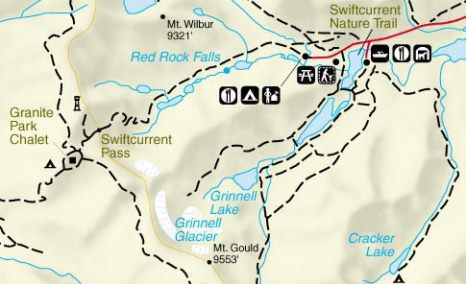 “She walked most of the way back, and then was carried on a litter the remaining portion of the [Swiftcurrent] Trail,” Rains said. “We believe it was a grizzly — there was a sow and her cubs noticed in the area, but we do not have a definitive confirmation.” She was first taken by Glacier County EMS to Browning for medical attention before being transported to Kalispell Regional Medical Center, where Rains said she is currently being treated for her wounds. Because the attack resulted from a surprise encounter, Rains said park officials are not actively searching for the bear. – For complete article see
  Alaska 08/27/16 adn.com/alaska-news: by Ned Rozell – While Alaskans have long endured dense mosquitoes and frigid air, we’ve always had the absence of venomous snakes and dog ticks. But the latter may be establishing themselves here. Ticks that infest red squirrels, snowshoe hares and a variety of birds have always been present in Alaska, but a team of biologists and veterinarians recently found five non-native ticks on Alaska dogs and people. In a recent study published in the Journal of Medical Entomology, researchers identified brown dog ticks, American dog ticks, Rocky Mountain wood ticks, deer ticks and Lone Star ticks in Alaska. A few of those creatures hitchhiked up on animals and humans that had recently visited the Lower 48. But some had not.
 North Carolina 08/26/16 wect.com: Seven horses and one human have been infected with mosquito-borne eastern equine encephalitis this summer in North Carolina. The disease, also known as EEE or ‘Triple E,’ can cause inflammation of the brain. There is a vaccine for horses, but there is none for humans. State Health and Human Services’ Division of Public Health officials noted there was a single case affecting a human reported in North Carolina. Cases affecting horses were reported in Brunswick, Hoke, Onslow, Pitt, Robeson, Sampson and Wake counties. “Triple E is not communicable between horses and people,” said State Public Health Veterinarian Carl Williams, DVM. “It is transmitted to humans by the bite of an infected mosquito. While Triple E is very rare in humans, when it does occur it is a serious illness, so it is very important to take protective measures against mosquito bites.” Symptoms for EEE in humans may include high fever, severe headache, stiff neck, and sore throat. Those at highest risk live in or visit woodland habitats. – See
  South Dakota 08/30/16 siouxlandmatters.com: by Lukas Voss – The South Dakota Department of Health has confirmed the first death of West Nile Virus in the state in two years and this season. The individual has not been identified but placed in the age group between 80 and 89. This marks the 74th confirmed case in the state with most of them being diagnosed with the common West Nile fever, 12 percent were found to suffer from the more severe neuro invasive diseases. – For complete article see
  Florida 08/31/16 clickorlando.com: by Dawn Brooks – After a horse tested positive for rabies Tuesday, the Florida Department of Health in Brevard County issued a rabies alert for the Weber Road area in Malabar. Officials said all residents should be aware that rabies is present in the wild animal population and that domestic animals are at risk if not vaccinated. – See
 west-nile-virus-in-maricopa-county-this-season/88967118/
 08/18/16 whitecountynews.net:by Debbie Gilbert – A woman in the Sky Lake community in northern White County is receiving medical treatment after being bitten by a rabid cat on Saturday, Aug. 13. Sean Sullivan, White County environmental health manager, said the woman is an animal devotee who recently began feeding a stray cat that showed up near her home. “But after a day or two, it bit her,” Sullivan said. “I don’t think she had the cat long enough to know its normal behavior, so she may not have recognized symptoms of rabies.” He said the woman began receiving prophylactic medical treatment on Sunday, even before tests results were available, to prevent her from possibly developing rabies. Sullivan sent the cat’s remains to the Georgia Public Health Lab, but did not receive confirmation of rabies until Wednesday. On Thursday, he began posting signs in the Sky Lake area, alerting residents that there had been a rabies case in the vicinity. – See
  South Carolina 08/18/16 indexjournal.com: Four people have started treatment after potentially being exposed to rabies by a pet cat with the disease in Troy, according to a release from the state Department of Health and Environmental Control. The cat began to act irregularly Aug. 11 and died the next day, the release said. It was confirmed to have rabies Monday. The people were bitten or exposed to the cat’s saliva while trying to provide it with care. The cat is the fifth animal in Greenwood County to test positive for rabies this year. – See
 British Columbia 08/14/16 ctvnews.ca: A 10-year-old girl walking with her father on a hiking trail in Port Coquitlam, B.C. on Saturday was attacked by a black bear that witnesses say tried to drag her off into the woods. The girl’s father and others successfully fought the bear off with rocks and sticks. She was rushed to hospital with critical injuries, according to a spokesperson for B.C. Ambulance Service. “It didn’t want to let go,” one witness told CTV Vancouver. “It pulled her into the bush and was trying to pull her further and people were whacking its head, eventually it let go but tried to bite her again.” The bear, which officials say was with its cub at the time, was later located by wildlife authorities and killed. Conservation officers tranquilized the nearby bear cub and said the animals were likely drawn to the area by the smell of garbage. It’s unclear what happened to the cub. – See
  National 08/12/16 wsj.com: by Thomas M. Burton – The federal government on Friday declared a public health emergency in Puerto Rico
  North Carolina 08/12/16 wfmynews2.com: An 11-year-old Asheville boy is now recovering at Levine Children’s Hospital because of La Crosse Encephalitis. His mother says he could have died if it wasn’t caught soon enough. JJ Wise’s mother says he was playing outside, was bitten by a mosquito and quickly developed severe headaches that didn’t seem to go away with treatment. “They did some MRI’s, they did some more tests and they did another spinal tap on him,” said Kim Wise. Doctors eventually determined the boy was bitten by a mosquito infected by the La Crosse encephalitis virus. He was rushed to Charlotte and was hospitalized. Friday the family invited NBC Charlotte into the hospital to share his story. JJ suffered a stroke, which triggered speech issues and weakness. Now he’s learning to keep his balance while walking down the hallway. JJ says, “I’m good, I’m getting stronger and stronger.” He says he has a message for his friends back home. “I hope all of you are doing better and hopefully no mosquitoes bite you.” – For complete article see
 The couple ended up in the hospital with serious injuries. “Both of them required them multiple stitches and we understand the woman who was attacked actually is going to need on surgery her hand. Depending on where you got bitten and how prolonged an attack was which is even rare to happen the injuries could be serious,” said Schain. As a precaution, the couple is undergoing treatment for rabies. “This attack was very unusual. Healthy beaver usually don’t go after people and beaver don’t often get infected with rabies,” said Schain. DEEP officials did encounter a beaver with aggressive behavior, but have been unable to capture the animal. – See
  California 08/09/16 .latimes.com: by Erica Evans – Police have ordered the closure of a popular Montebello park and petting zoo after three people were attacked recently by coyotes. Although incidents of coyotes attacking small dogs and cats are a fact of life in Southern California, attacks on people are rare, and officials and neighbors alike expressed worry Tuesday over the animals’ brazen behavior. Two of the victims were forced to seek treatment for possible rabies infection. “People are not food for coyotes,” said Andrew Hughan, information officer for the California Department of Fish and Wildlife. “Generally, they’re afraid of us.” Wildlife personnel shot and killed four coyotes at Grant Rea Park Monday night and one more Tuesday evening, officials said. They also set up traps with bait but did not capture any animals that way. The park, a grassy recreational area that covers about one square mile at 600 Rea Drive, features a petting zoo filled with ducks, goats, donkeys, sheep and other animals, as well as a playground, several baseball diamonds and picnic tables. Officials ordered the park closed Monday night and said it will remain closed until the Department of Fish and Wildlife determines that it is safe for the public. The three victims — two men and a teenage girl — all suffered unprovoked attacks. – For complete article see
  Pennsylvania 08/09/16 post-gazette.com: by Andrew Goldstein – A coyote that tested positive for rabies was shot and killed hours after it bit a man Monday night in Lincoln Borough, according to the Allegheny County Health Department. The coyote was shot Tuesday by officers with the Lincoln Police Department, the county said, and Pennsylvania Game Commission employees took its carcass to the health department lab, where it tested positive for rabies. The bite victim, who was identified only as an adult male, has already begun post-exposure treatment, the health department said. Even though the rabid coyote was killed, the health department warned that because coyotes are pack animals, others may be infected. – For complete article see
  Rhode Island 08/08/16
  Colorado 08/11/16 denverpost.com: by John Ingold – Thirteen people in Colorado have tested positive for West Nile virus so far this year, including one who died from the disease, the Colorado Health Department announced Wednesday. Three of the cases were in Boulder County, according to a news release by that county’s public health department. The cases in Boulder County involved a 74-year-old woman, a 47-year-old man and a 13-year-old boy. None of the three were hospitalized. It is unclear where the other cases have been reported, and health officials would not release more information about the death. The first case of West Nile virus was reported this year in June in Larimer County, said Jennifer House, the state public health veterinarian. The Colorado Department of Public Health and Environment said in its announcement Wednesday that people, animals or mosquito pools have tested positive for West Nile in 14 counties: Adams, Arapahoe, Bent, Boulder, Denver, Douglas, El Paso, Gunnison, La Plata, Larimer, Mesa, Morgan, Rio Blanco and Weld. – For complete article see
 To try to shed light on the discrepancy, the scientists spent three years testing birds and mosquitoes for WNV in Atlanta, analyzing the blood of the insects to determine on which birds they had fed. The scientists were keeping a sharp eye for the number of American robin infections. They consider that species a “super spreader” of WNV, for its capacity to store enough of the virus in its blood to pass along to other mosquitoes. While robins were certainly carriers, the researchers found a twist in the tale, one concerning a favorite of backyard birders everywhere: the cardinal.
 “What we found is that, for some unknown reason, around the middle of July, mosquitoes in Atlanta seem to decide that they have had their fill of robins and they switch to feeding on cardinals,” said the study’s lead author, Rebecca Levine, in a statement. “But cardinals, even though they can be infected with West Nile virus, are much less likely to have enough virus circulating in their blood to transmit the disease back to feeding mosquitoes,” said Levine, now with the U.S. Centers for Disease Control and Prevention but at Emory University during the research. “That is why we called them ‘super suppressors’.” . . . But, her team’s findings don’t suggest cardinals are a magic red bullet against WNV, Levine said. The birds might not have the same roles elsewhere, depending on the local ecosystems in which they live. Findings from the study have just been published in the American Journal of Tropical Medicine and Hygiene. – For complete article see
  California 08/05/16 mercurynews.com: by Tracy Seipel – California public health officials on Friday said that an elderly Sacramento County resident is the state’s first confirmed death from West Nile virus this year. No other information about the victim was provided. susceptible, as this unfortunate fatality illustrates,” Dr. Karen Smith, director of the California Department of Public Health and the state’s health officer, said in a statement. “West Nile virus activity in the state is increasing, so I urge Californians to take every possible precaution to protect themselves against mosquito bites.” The state reported 53 deaths from West Nile virus in 2015, the most since California began recording West Nile cases in 2003. – For complete article see
  Texas 08/09/16 nbcdfw.com: Dallas County health officials confirm the first death related to West Nile virus for the 2016 season in North Texas. The victim – a person in their 60s – lived in the 75006 ZIP code in Carrollton and was previously diagnosed with the West Nile neuroinvasive disease, officials said in a press release Monday afternoon. – See
  Puerto Rico 08/05/16 npr.org: by Jason Beaubien – The Zika virus outbreak in Puerto Rico is expanding rapidly. Recently, the island has been reporting more than a thousand new cases of Zika each week. The situation is expected to get worse before it gets better. “We are right now probably in the month or 6 weeks of peak transmission,” says
 Utah 08/09/16 utahcountyonline.org: Media Release – Utah County Health Department (UCHD) officials are investigating the death of a female Utah County resident related to hantavirus. The female was between the ages of 18 – 44, from Utah County, and had no other apparent health issues. This is the second death related to hantavirus pulmonary syndrome (HPS) in the state in 2016, and tenth case since 2006. Hantavirus infection is a virus transmitted by infected rodents through fresh urine, droppings or saliva. The main way the virus is spread to people is when they breathe in the air contaminated with the virus. Other transmissions can include an infected rodent biting a person, touching objects or eating food contaminated with rodent urine, droppings, or saliva from an infected rodent. – For complete release see
  Pennsylvania 08/05/16 wearecentralpa.com: A cat in Huntingdon County has tested positive for Rabies. We’re told a family in who lives on Metztown Road in Brady Township took their unvaccinated farm cat to a veterinary clinic after they say it started to act restless and panting. The veterinary told them to keep the cat contained, but the next day the cat escaped the enclosure they had it in and bit a child. At that point the cat was euthanized and submitted for rabies tests. They came back positive. Several people are receiving post exposure treatment for rabies. – See
  South Carolina 08/05/16 wyff4.com/ : At least five people were potentially exposed to rabies by a puppy that tested positive for the disease in Chesnee, the Department of Health and Environmental Control reported today. The puppy was a Germany Shepherd-mix puppy that was being sold at Burr’s Trading Post on Old Stage Road, June 20 from an individual not affiliated with the store. The puppy began to show neurological symptoms at the end of July, and was submitted to DHEC’s laboratory for testing on Aug. 1. DHEC said several other puppies were for sale. DHEC recommends that anyone who obtained or was exposed to a puppy there around this time should watch the animal for signs and symptoms of rabies and immediately seek veterinary care if the animal becomes ill. – See
 The findings could shake up conservation efforts for wolves. According to the
  Ontario 08/01/16 therecord.com/news-story: People walking along the popular Niska Trail in Guelph’s west end are urged to be vigilant after two recent coyote sightings. A coyote was spotted stalking people and dogs in two separate incidents this month, report the City of Guelph and Guelph Humane Society. In the first incident, a coyote attacked a dog while the owner was hiking on the trail. In the second, a coyote attempted to attack a hiker walking two dogs. It’s unknown if the same coyote was involved. Trail users are urged to keep their dogs leashed to ensure the pet’s safety, clean up after their dog because coyotes are attracted to feces, and avoid using the trail at dawn, dusk or in the dark when coyotes are most active. – For complete article see
  Wyoming 08/01/16
  South Carolina 08/03/16
  Florida Undated cdc.gov: Media Release – The Florida Department of Health has identified an area in one neighborhood of Miami (Wynwood) where Zika is being spread by mosquitoes. This guidance is for people who live in or traveled to this area any time after June 15 (based on the earliest time symptoms can start and the maximum 2-week incubation period for Zika virus). – For complete release and recommendations see
 Zika virus spreads to people primarily through the bite of an infected Aedes species mosquito (Ae. aegypti and Ae. albopictus), but can also be spread during sex by a person infected with Zika to their partner. Most people infected with Zika won’t have symptoms, but for those who do, the illness is usually mild. However, Zika infection during pregnancy can cause a serious birth defect of the brain called microcephaly and other severe fetal birth defects.
 California 07/28/16 northcoastjournal.com: by Kimberly Wear – Health officials are stressing the importance of vaccinating pets after a Humboldt County dog tested positive for rabies for the first time in more than five years. “The animal is known to have traveled to several locations throughout the county. Public Health officials are working to assess the possibility of exposure to other domestic animals and humans,” a release from the Humboldt County Department of Health and Human Services state. DHHS reported the dog is believed to have been exposed during a fight with a rabid skunk.
 Maryland 07/21/16 oceancitytoday.net: by Greg Ellison – One rabid cat in West Ocean City, and the fate of other feral cats at the same location have generated hundreds of emails and even spurred a small protest by feline protection activists last Thursday at the government center in Snow Hill. During Tuesday’s Worcester County Commissioner meeting, however, Worcester County Health Officer Debbie Goeller said the department plans to remove and euthanize a colony of feral cats near the Ocean Village condominiums in West Ocean City. The rabid cat reported to the department came from that colony. Goeller said her department was contacted on June 11 by a veterinarian’s office after a cat that appeared to be rabid was spotted by a family renting an Ocean Village unit. “This cat needed to be euthanized and was sent to the state rabies laboratory for testing.” Four days later, the state confirmed that the cat was rabid, Goeller said, at which time her department posted rabies advisory notices in the complex. – See





 Natural Unseen Hazards Blog